
The article argues that tool purchases should be driven by real projects, not aspirational “someday” possibilities. There’s no universal starter shop—needs vary by what you build, your space, and your budget. Buy solutions to current problems, avoid redundant tools (especially in hybrid shops), and favor hand tools that complement rather than duplicate machine capabilities. Don’t wait for a “complete” shop; start building so the true gaps reveal themselves. Many issues are skill, setup, or sharpening problems—not tool problems—so tune what you own before upgrading. The core rule: buy tools only when a specific project creates a clear need, research broadly (including used), and remember the goal is building, not collecting.
Stop Buying Tools Until You Know What You Want to Build
A Recovering Tool Collector’s Guide to Buying What You Actually Need
Tool shopping is one of woodworking’s great side hobbies. Or maybe we should call it a guilty pleasure. Whether you’re scoping out the local flea markets hoping to find old Stanley Bailey #4 in need of some TLC, or maybe you’re waiting for that shiny new 3HP Sawstop to go on sale at your local Woodcraft, tool lust is something nearly all of us experience. If you don’t believe me, go to Youtube. The most viewed videos are usually spec sheet “algorithm bait” tool reviews. Speaking for myself as a content creator, my most successful videos are not only tool reviews, but shop tours. People love tools! And it’s enough to make you wonder if this little side hobby is threatening to replace the actual hobby. Maybe we can explore that a little more in a future article.
That said, I completely understand the appeal. Tools are fun. They allow us to do things we just can’t do with our bare hands. Duh. And in woodworking they allow us to take a simple raw material like wood, and transform it into anything our imagination can cook up. For many people, tools represent the woodworker we plan to become, not necessarily the woodworker we currently are. In other words, tools promise possibilities, potential, and progress (theoretically, anyway).
The problem is that new woodworkers often buy tools before they know what they’ll be building. In the ideal world, that order should be reversed.
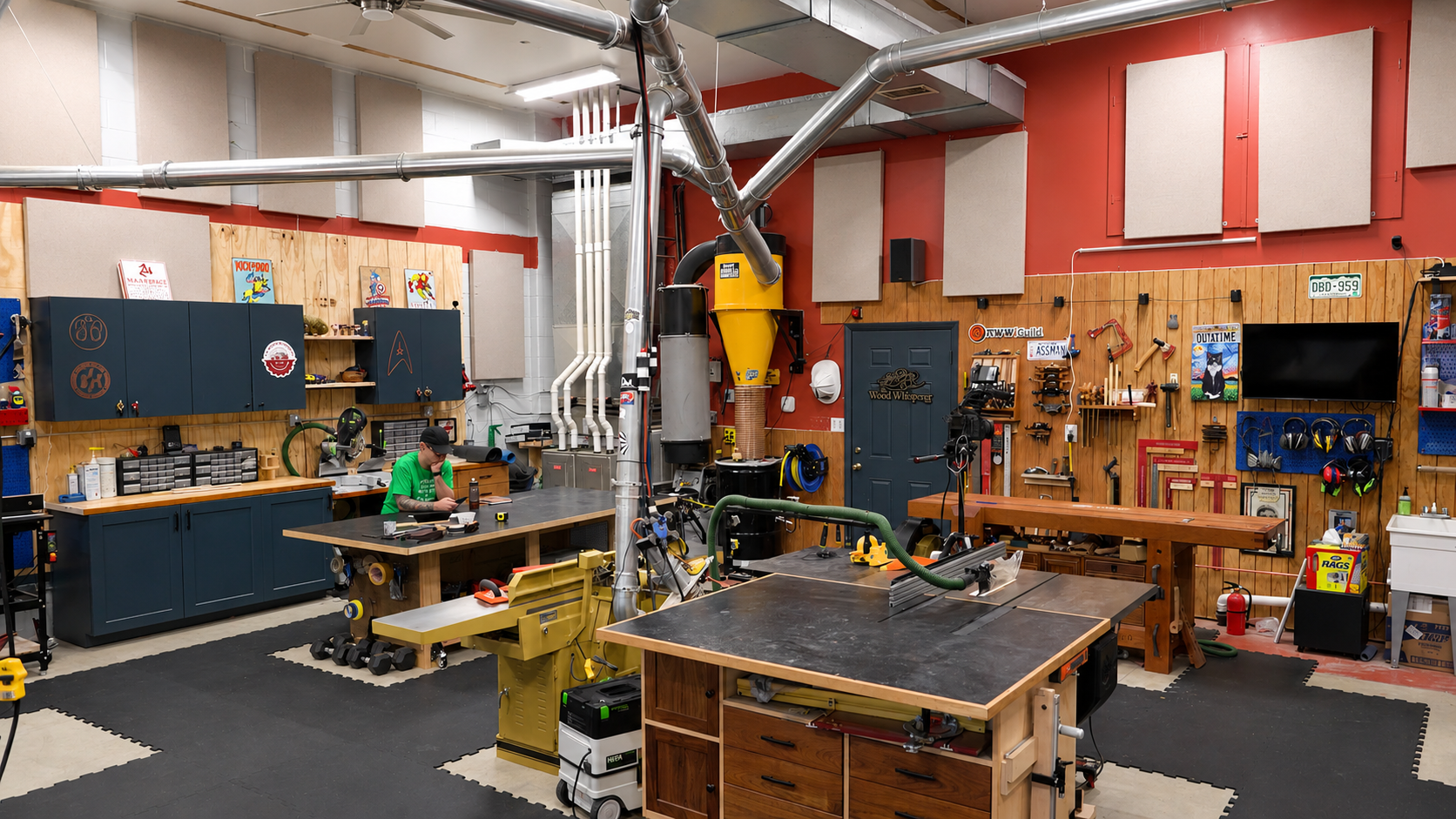
There Is No Universal Starter Shop
New woodworkers often ask me for a list of tools they should buy. Even woodworkers who have been at it for a while will email asking “Here’s my current list of tools, what should I buy next?” While I can and do answer these questions based the information provided, I can’t help but let my personal preferences and biases influence my answer. And I always remind them that what’s right for me may not be right for them. Ultimately, it comes down to the things they plan to build, the space they have to build in, and the budget they have to support their purchases. That’s a lot of variables to consider when giving advice to a stranger.
And while budget and space are obviously important considerations, the factor that drives specific tool purchases the most is what they plan to build. After all, a person who wants to turn bowls needs a different shop than someone who wants to build cabinets. A chair-maker has different tooling needs than a person making cutting boards and small boxes. And a builder who wants to create a side hustle batching out epoxy charcuterie boards has different needs than someone making one Maloof rocking chair each year.
That’s why I always say the project should drive the tool purchase. Unfortunately, many of us do the opposite. We buy a machine or hand tool, then search for a project that justifies owning it. I have done this more times than I care to admit. Sometimes it works out. Other times, the tool sits in a corner while I slowly accept that I bought a very expensive paper weight.
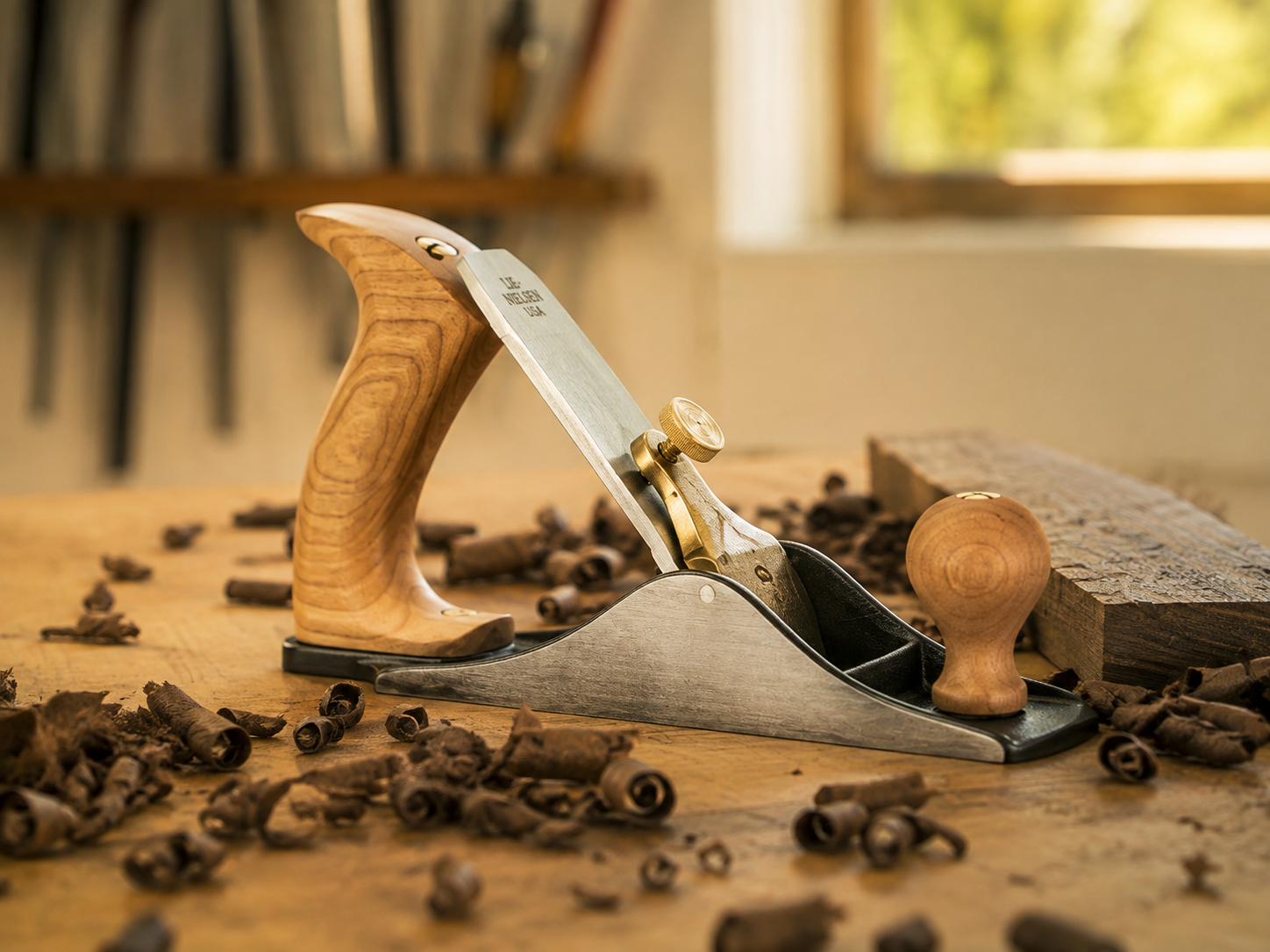
I can recall one specific instance, early in my woodworking, when I was very hungry for hand tools and had no budget to support my cravings. I heard in the forums that Lie-Nielsen was “the best” so when I saw a LN plane pop up on Ebay for a reasonable price, I snatched it up. When the plane arrived, I was disappointed to see a heavily-curved blade and a very narrow body. What the hell did I just buy?! As it turns out, it was a scrub plane. A damn nice one too. If you’re not familiar, a scrub plane is used for heavy stock removal as one of the first steps in milling rough lumber. But as the owner of a small, underpowered second-hand jointer and lunchbox planer, I had no intention of rough milling boards by hand. I held onto the plane for years in hopes that I’d find a use for it. I eventually sold it. Thankfully, Lie Nielsen tools generally hold their value so I was able to get my money back.
Buy Solutions, Not Possibilities
Now that we know where tool buying can go wrong, how do we make better choices? Start by changing how you judge a tool. Instead of asking what it might let you do someday, ask what problem it solves today. If you can’t name that problem, it may not be the right time to buy it.
That sounds simple, but marketers and influencers make their money selling possibilities and overstating small gains. “Your work would be so much better if you used this red aluminum square!” “Imagine what you could make with this hand-powered CNC!” “With this 5HP bandsaw, the lumber will practically mill itself!”
Possibilities sell because they let us picture a better shop, better projects, and a better version of ourselves. Most woodworkers want to improve, and tool marketing often suggests that buying the right thing can speed up that process. But a tool can’t replace skill, experience, or a clear need. If its main strength has nothing to do with the work in front of you, you may be buying a solution to a problem you will never have. If you’re upgrading a tool you already own, a small gain in power, speed, or accuracy may not change the final result at all.
Tool purchases work best when a real job creates the need. When my first home needed new flooring, baseboards, and window casing, I had a clear reason to buy a good miter saw. It helped me finish those projects, and as I got deeper into furniture-making, I kept finding new uses for it. That order matters. The projects justified the tool. The tool did not have to justify itself by creating projects.
Before buying, ask one question: What will this tool help me do next? A clear answer points to a useful purchase. A vague answer usually means you’re buying the possibility of becoming a different woodworker.
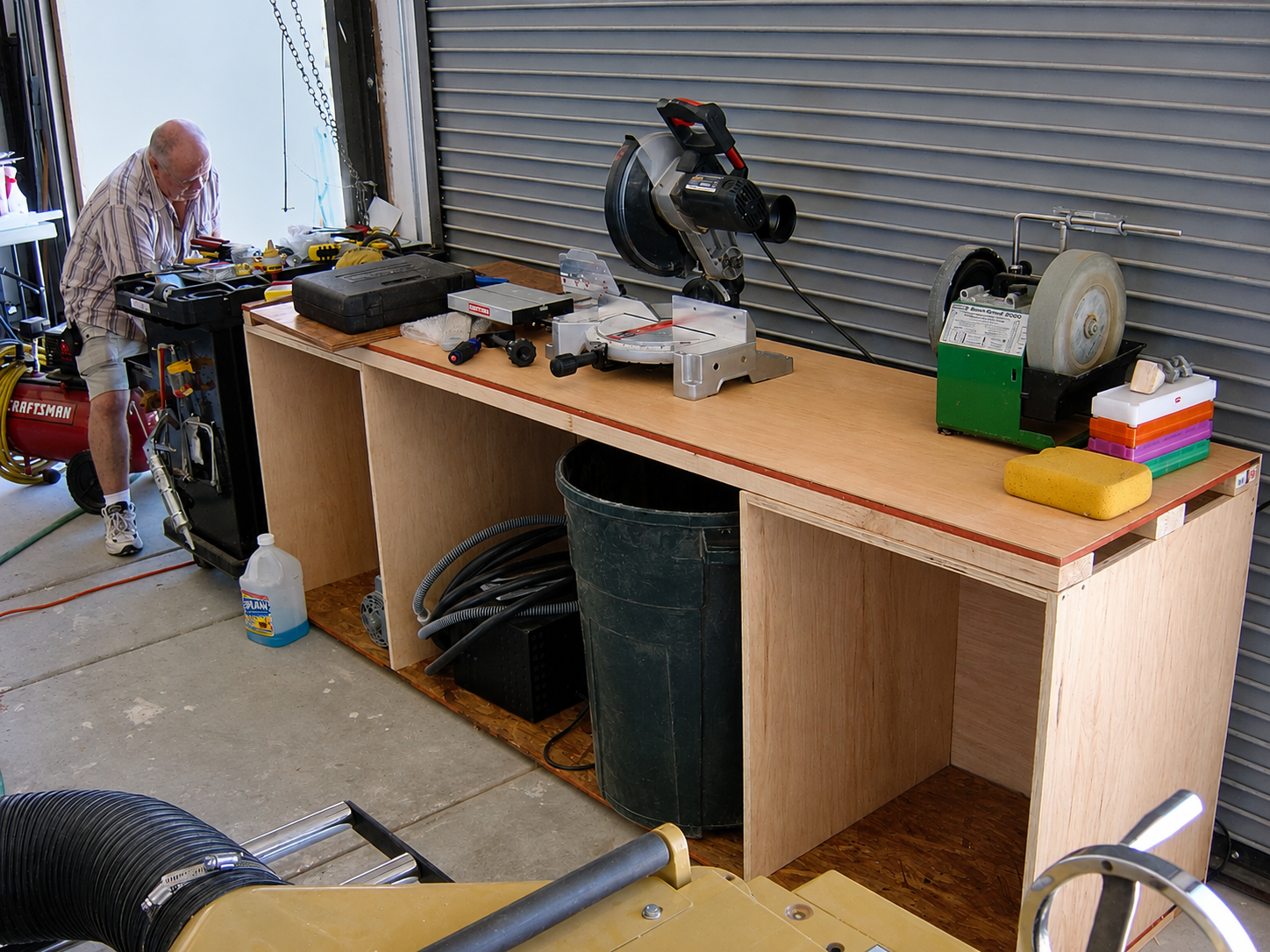
Avoid Redundancy – Not Just A Hybrid Woodworker’s Problem
In hybrid woodworking, we keep one foot in the power-tool world and the other in the hand-tool world. That gives us plenty of options, but it also creates a potential problem: redundancy.
Using my earlier scrub-plane story as an example, if you already own a jointer and planer, you probably don’t need a scrub plane. If you cut most of your joinery with a table saw and router, you may not need a full set of rip and crosscut saws. If you prepare surfaces with scrapers and sanders, a No. 4 smoothing plane may not add much to your process.
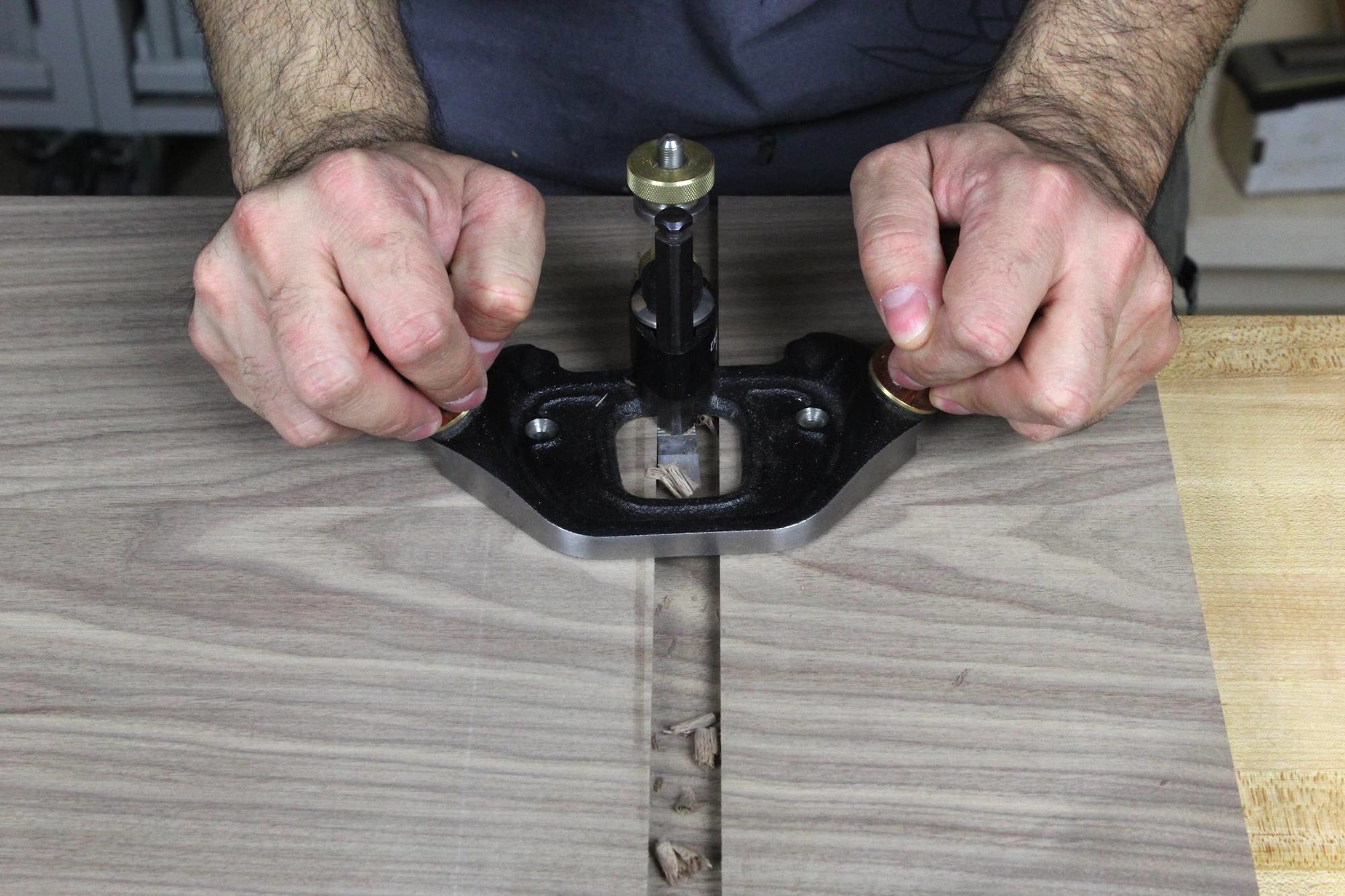
On the other hand, some hand tools fit beautifully into a power-tool shop because they add refinement and control. A shoulder plane can fine-tune a tenon cheek after the table saw does the bulk of the work. A router plane can flatten a dado or rabbet after a machine cuts it. These tools complement your power tools. They don’t duplicate them.
That distinction matters. Redundant tools cost money, take up space, and give you more choices every time you start a job. Too many choices can lead to decision paralysis, especially when the tool you want to use isn’t the one that would do the job best. I also feel a strange amount of guilt when an expensive tool sits unused, so I sometimes choose a method based on which tool I think I should use rather than which one makes the most sense.
This problem isn’t limited to hybrid woodworkers. A hand-tool woodworker can own six planes that do nearly the same job, just as a power-tool woodworker can collect several machines, jigs, and battery-powered gadgets with overlapping uses. Whatever your preferred method, the question remains the same: Does this tool add a useful capability, or does it merely give me another way to do something I can already do?
The goal of a hybrid shop isn’t to own every hand-tool and power-tool option. It’s to let each type of tool handle the work it does best. And yes, this is where I shamelessly mention my book, Hybrid Woodworking. The book explores how I combine power tools for speed with hand tools for control, helping you work more efficiently without filling your shop with tools you don’t need.
Don’t Wait for the Perfect Shop
New woodworkers often delay building because they think the shop needs to be “complete” first. Bad news, Bubba….the shop will never be complete. After almost 25 years of woodworking, my shop still changes as my work, space, interests, and budget change. That isn’t a problem. A good shop should adapt to the needs of the woodworker using it.
Unfortunately, we’re surrounded by videos and ads showing large shops filled with every tool imaginable. If that’s your main view of woodworking, it’s easy to assume you need all of it before you can build anything worthwhile. But smart tool choices come from building, not just planning.
Once you start making projects, the gaps become obvious. Maybe your circular saw handles rough cuts but struggles with repeatable crosscuts. Perhaps your router cuts mortises, but you need a chisel to square the corners. You may discover that your sander works fine, but your dust collection doesn’t. More importantly, you’ll learn which parts of woodworking you enjoy enough to justify buying better tools for them. If you wait for the perfect shop, you may spend years collecting tools without learning how to build.
Instead, choose a project that stretches your skills without exceeding what you can do safely. You’ll be surprised by how much you can accomplish with a basic tool kit, a few shop-made jigs, and the willingness to learn another way of doing something. Many tools can handle more than one job, provided the alternate method remains safe.
As you work, you won’t just find the gaps in your tool collection. You’ll understand what filling each gap would actually change. That puts you in a much better position to decide whether a new tool will save meaningful time, improve your results, make the work safer, provide immense satisfaction, or merely give you another object in the shop that collects dust (and not in the good way).
A generic tool list cannot tell you which tasks will frustrate you, which methods you’ll enjoy, or which machines will fit your space. A project can.
Do Not Confuse a Tool Problem With a Skill Problem
A new tool can make a task faster, easier, or safer. It cannot replace the skill and knowledge required to use it well. Since the earliest days of The Wood Whisperer, I’ve heard some version of the same comment: “I could build that too if I had those tools!” At this point, it has become a woodworking meme. My first instinct is to reply, “No, you couldn’t.” Thankfully, I don’t always follow my first instinct. The truth is that very little of what I build requires the exact tools you see in my shop. Most projects could be completed with smaller, cheaper, or less specialized tools. The work may take longer or require a different approach, but a determined woodworker will find a way.
The larger problem is that we often blame the tool when the real issue is sharpening, setup, technique, or preparation. If your chisel dents the wood instead of slicing it, you probably don’t need a better chisel. You need to sharpen the one you have. And if sharpening doesn’t improve the cut, you may need to improve your sharpening skills. If a mortise-and-tenon joint comes out loose, a new table saw probably won’t help. The problem may come from poor layout, inconsistent stock, skipped test cuts, or a setup that was slightly off.
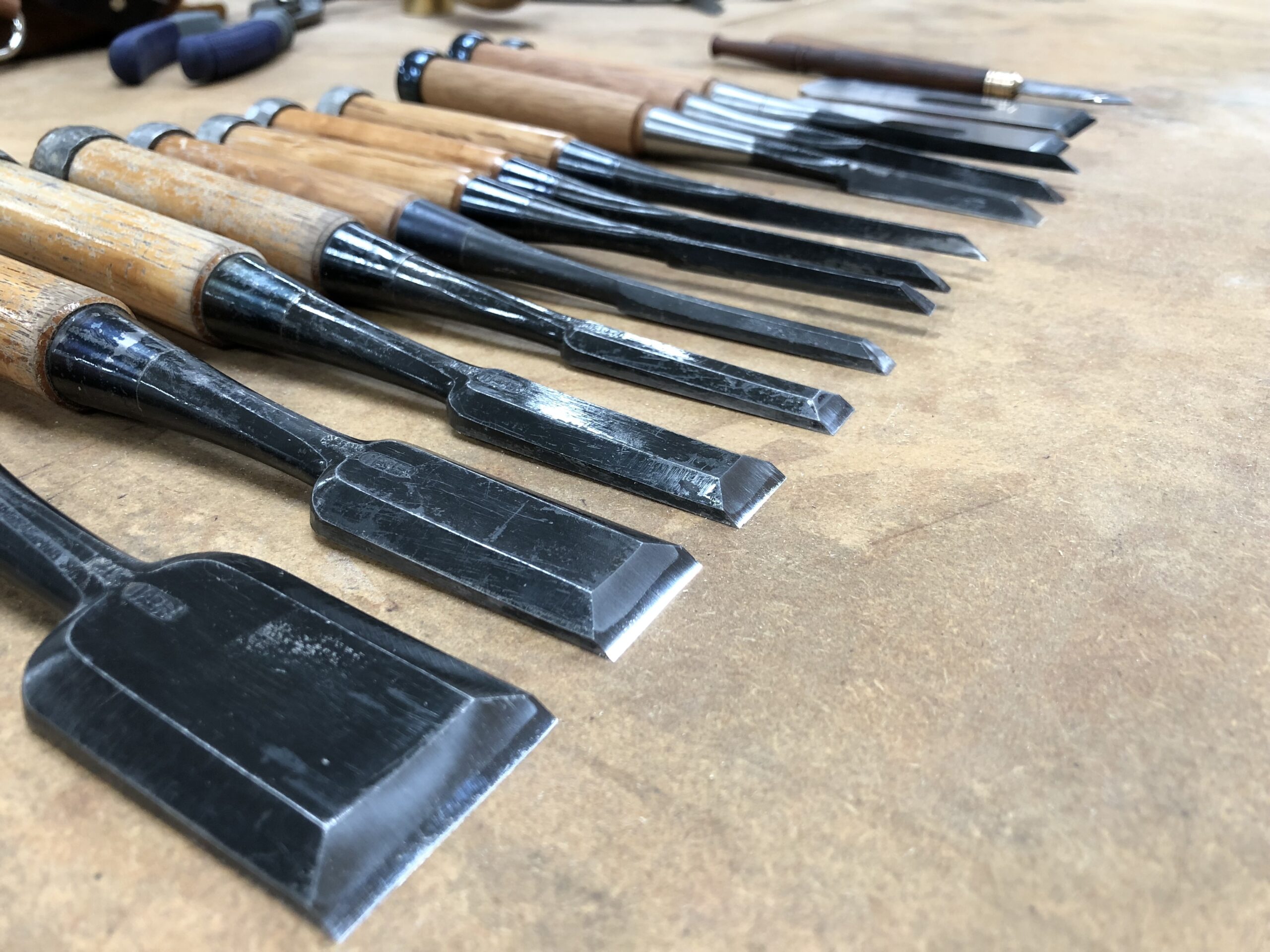
Many tools also require regular setup and tuning. A hand plane needs a sharp iron and a properly adjusted chipbreaker, sole, and mouth. A bandsaw depends on the right blade, proper tension, and precisely-set guides. A table saw must have the blade, miter slots, and fence aligned. These adjustments may feel tedious, but they affect the quality and safety of every cut that follows.
I understand the urge to buy your way out of the problem. I’ve done it many times. After all, a new or upgraded tool feels productive because it appears to offer a shortcut. Why spend an afternoon tuning an old bandsaw when you could buy a better one? Well, because the new bandsaw will eventually need tuning too. Even if it cuts perfectly out of the box, blades wear out, guides move, fences shift, and parts will need adjustment. If you avoid learning those skills now, buying a new machine only postpones the problem. Embrace your inner Snodgrass!
Before replacing a tool, make sure it is sharp, tuned, and set up correctly. Make sure you understand how to use it, because technique matters too. Learn what the tool does well, where it struggles, and whether another method could produce the result you need. Only then can you tell whether the tool is holding you back or whether you still have more to learn from it.
A Better Tool-Buying Rule
Hindsight is 20/20, so here’s the rule I wish I had followed from the start, and one we should share with every new woodworker: Buy tools when a real project creates a clear need. That one rule can save a lot of money, space, time and frustration. Now, if you have the budget and simply want a particular tool, I’m not here to dissuade you. You do you, boo. But if you’re watching your budget and want to become a better woodworker and a more well-rounded shop owner, this rule will serve you well.
When a project does create a need, research the whole class of tool, not just one model or brand. If you watch video reviews, don’t settle for the first one the algorithm feeds you, unless it’s mine, of course. The videos at the top of the search results aren’t always the most useful. Dig deeper. Some of the best advice comes from people with fewer subscribers, modest production value, and ordinary shops who have spent real time using the tool. Look at new and used options. eBay and Facebook Marketplace can be hit or miss, but good deals are still out there. And before buying anything, ask whether a tool you already own, a different technique, or a shop-made jig could solve the same problem.
Even if you follow this rule, you’ll still buy tools you regret. That’s part of learning what kind of woodworker you are. As your skills grow, your interests and methods will change. Your tool collection will change with them. The good news is that this process slows down as you get older, crankier, and more set in your ways. Eventually, you realize that you already own nearly every tool you need. Your true limitations will be an angry sciatic nerve and the number of hours in the day, which seem to constantly get shorter.
Remember, the goal isn’t to own a complete, state-of-the-art shop. The goal is to build things. If a new tool helps you build something you already intend to make, buy it. If it only helps you imagine what you might build someday, wait.
Or ignore me. It’s your shop and your money.
The post Stop Buying Tools Until You Know What You Want to Build appeared first on The Wood Whisperer.
Login to comment
LoginRelated Conversations
Recent Conversations
-
Adhesive Hooks Wholesale – Muffadal for Practical Mounting Needs
0 Replies
-
What's an engineering "rule" you were taught early on that you no longer agree with?
0 Replies
-
Travel with an Engineer ✈️ part 1
0 Replies
-
ACP Silicone Shop Near Me – Muffadal
0 Replies
-
Hematologist in Hyderabad for Blood and Bone Marrow Care
0 Replies
Your Conversations
-
Upgrades at 149 St-Hostos Improve Mobility for Thousands of Riders While Preserving One of New York City’s Oldest Subway Stations
0 Replies
-
myNORD shop relaunches with improved user guidance
0 Replies
-
$500K in Repairs and 280 Devices Restored Through EWB-USA’s Guatemala Community Health Institute
0 Replies
-
Protected: PFAS Destruction: How to Define the Fluorine Control Volume Before Commissioning the Process
0 Replies
-
PACK EXPO International 2026 Delivers Innovation, Connections, and Business Opportunities in Chicago
0 Replies