
The article argues that “fine woodworking” begins with deliberate intent but must be proven through execution: thoughtful design, appropriate materials, durable joinery, and meticulous attention to visible and hidden details. It contrasts non-woodworkers’ focus on solidity and function with makers’ scrutiny of grain, proportions, and precision, and shares pros’ views that emphasize consideration, balance, and integrity. Because standards evolve as skills grow, “fine” is less a fixed benchmark than an aspiration—doing the best you reasonably can with your current tools and knowledge, and letting that care show in the finished piece—without gatekeeping.
What is Fine Woodworking?
On a recent Woodworking Morning Show, a live stream I do every Friday with my wife, Nicole, a viewer asked a simple question: “What, according to you, is fine furniture? How do you define it? When one comes across a piece of furniture, how does he/she decide if it’s a specimen of fine furniture or not?”
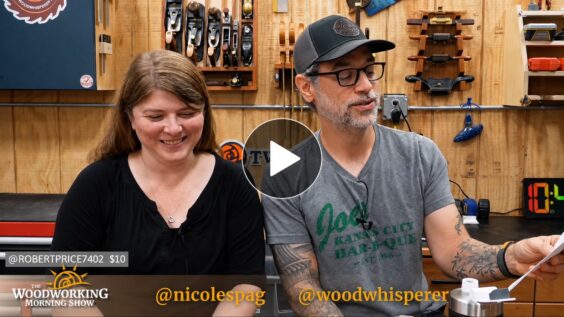
My answer on the show was pretty simple. I said that fine woodworking begins with intent. Are you simply getting a project done or are you making deliberate choices about the design, materials, joinery, etc…trying to make each of them as good as your skills and time allow? If you’re doing the latter, then it’s fine woodworking.
After the show, I gave it a lot more thought and realized there’s so much more to say on this topic. And I’m certainly not the first person to try to answer this question. Makers and writers have wrestled with it before, and I even recall discussing it on a past Wood Talk episode. So this isn’t really new ground, but I hope I have something to add to the conversation.
Where Does “Fine” Begin?
Let’s start by examining the word itself. Merriam-Webster defines ‘fine’ in several ways depending on the context, but the ones that relate to this discussion include: superior in kind, quality or appearance, delicately made or proportioned, very precise or accurate, subtle or sensitive in quality, and marked by or affecting elegance or refinement.
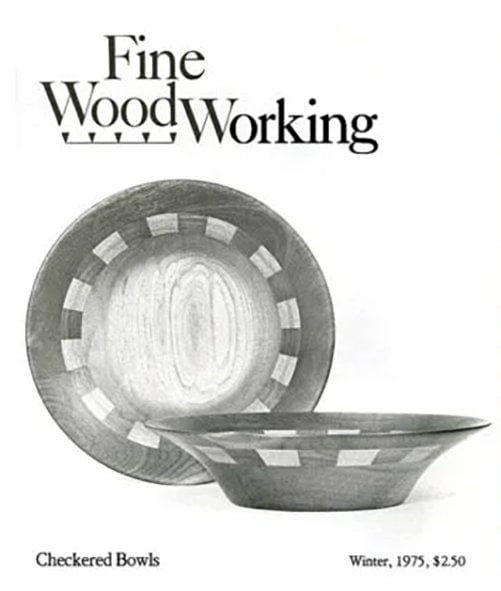
Another data point comes from the publication that bears the subject’s name: Fine Woodworking. In a 2024 Editor’s Letter, Mike Pekovich pointed out that when Paul Roman first started Fine Woodworking magazine in 1975, he chose ‘fine’ to separate the subject from construction and home-improvement work. Today, that distinction is pretty clear and I think most of us can point out the difference between home improvement or construction work, and fine woodworking. But just within the world of furniture itself, we have a whole range of quality levels to consider. And that leads to a very big question: Where’s the line between fine woodworking and not-so-fine woodworking?
Does fine woodworking require solid wood? Hand-cut dovetails? Expensive lumber? A flawless finish? Does the work have to be original? Does it matter what tools you used to make it? Domino? Pocket screws? CNC? 3D Printer?
How Non-Woodworkers See it
These debatable details came up in a funny way during the Morning Show when I asked Nicole, a non-woodworker, what fine furniture meant to her. Her first answer was, “Not plywood.” That happens to be something I disagree with but as we discussed it further, she explained that fine woodworking comes down to solid wood, quality, durability, and something that felt substantial.
While I gave her a hard time (because that’s my job), her answer was interesting because it focused on things I suspect many people outside of the craft notice first. I may think fine woodworking means fussing over details but the average onlooker is thinking more broadly and probably more practically. So in hopes of discovering a little more about the way non-woodworkers think, I asked a few more people in my life what they feel constitutes ‘fine woodworking’.
My friend Megan (book lover, mom, elite Fortnite player) said:
“If a piece feels solid, I trust more in its durability and proper craftsmanship. Function and durability is a must. What sets it over the top for me is not just aesthetics but also a unique design or detail that speaks to me.”
My mom had a more traditional definition:
“Fine furniture is built by hand with high-grade materials out of real wood. Using traditional hand cut joinery like dovetails and not nails, staples or glue.”
My buddy Tyler (veteran, business owner) was a bit more technical:
“Fine woodworking is attention to the details that no one will ever see. It’s relentless craftsmanship regardless of the material. For me it’s less about the tools used and more about the enduring quality of the finished product.”
This is hardly a scientific survey, but the answers offer a useful little snapshot. Material, design, durability, craftsmanship, and attention to detail came up in one form or another. And while actual furniture makers would certainly include most of these things in our own definitions of fine woodworking, it’s likely we take things a step further due to our familiarity with the process and the fact that we’re just a little crazy.
Woodworkers notice things like grain selection, reveals, unique joinery elements, negative space, and proportions. We also notice when things are off, like color differences between boards, tiny hairline gaps, construction that ignores wood movement, sanding swirls, streaky finishes, and all sorts of other things most normal people would never see.
What Furniture-Makers See
So let’s flip the script a bit and ask a few notable woodworkers what they think about this topic.
Philip Morley said:
“Fine furniture is more than simply being well made. It is the balance of proportion, material, craftsmanship, and restraint—choosing the right grain for the right element, giving care to every edge and surface, and bringing the same integrity to the parts you cannot see as those you can. For me, a fine piece doesn’t need to shout for attention; it draws you in, and the closer you look, the more you discover.”
Shannon Rogers said:
“Fine Furniture is furniture that has been intentionally designed considering all aspects from form and line as well as wood selection and composition. Joinery too should be considered as part of the design so as to make a long lasting, heirloom piece.”
Vic Tesolin said:
“Fine woodworking is about consideration. Every step is actually thought through instead of just done the easy way. The design, the wood you pick, how the piece is put together, the finish you choose: each one chosen on purpose, for what the piece is and how it’ll be used. It’s not just an idea you hold in your head, but something you actually put into practice as you go.”
In his Editors Letter, Mike Pekovich wrote “Ultimately, “fine” woodworking should describe our ambitions to do the best we can in building each piece and in putting the lessons learned to use on our next efforts. We don’t automatically get better with each project, but if we give our best on every build, we will eventually get where we want to go.”
This is all great food for thought!
Intent Is Not Enough by Itself
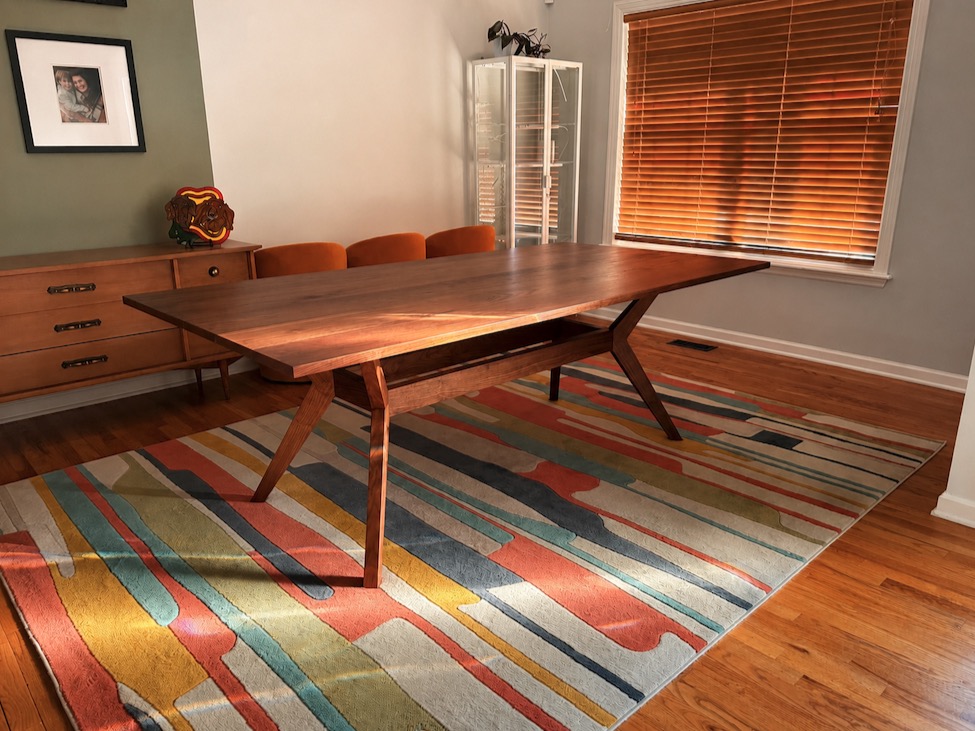
What I find most interesting is that there’s a common element to all of the professional woodworker responses. And oddly enough it ties right into what I was talking about on the Morning Show. They used words like care, consideration, balance, ambition, and of course, intention to describe making fine furniture. I think you really need to ask yourself questions like: Are you trying to make the piece as good as you currently know how to make it? Are you thinking about grain selection instead of just grabbing the next board? Do you care whether the joint fits perfectly? When you notice something is wrong, do you fix it? Did you choose that particular construction method because it made sense for the piece, or because it was the quickest way to get the project out of your shop? Questions like these say a lot about your intention when it comes to the thing you’re building.
That supports my first instinct about intention, but it also exposes a problem with my original answer: intention can’t be enough on its own. Just because I set out to build something mind-blowing, doesn’t mean I’m going to hit my target. I could plan a project from top to bottom, research every step, design the piece with its specific purpose in mind and end up completely screwing the pooch in the execution. Good intentions simply aren’t enough. No one is going to give you a trophy because you tried really hard.
So I think that’s where the other things mentioned by both groups come into play: appropriate material choices, craftsmanship, durability, quality joinery, function, etc. Without those, it’s going to be hard to slap the ‘fine’ label on anything you build. And as you become more skilled and more knowledgeable in the craft, you should find it easier to fully execute your intentions.
Your Definition of “Fine” Evolves
A joint that would have made you proud five years ago might make you cringe today. A surface you once would have called “perfect” now clearly has sanding swirls. A panel joint that previously got the job done is now seen as a gappy eyesore. Why is that? The simple answer is that you grew. Your standards changed and your ability to see and judge the details improved. Your woodworking “vision” got better.
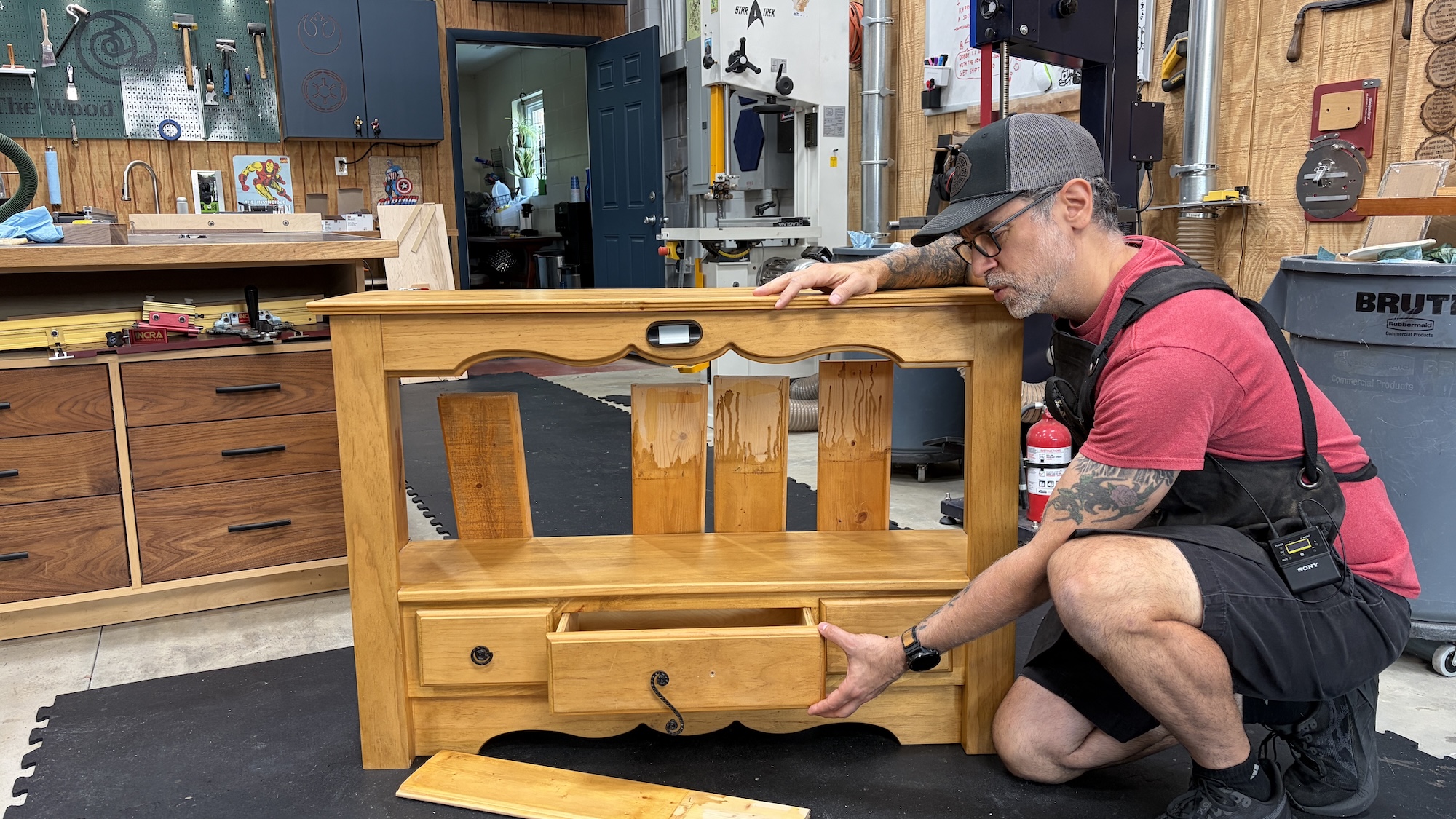
I work with a lot of new woodworkers and it’s always interesting to see how people acquire this vision at different rates. Some can immediately understand why we need to progress through the grits when sanding. Others balk at the idea and just want to get to applying the finish as soon as possible. I’ve also worked with experienced woodworkers whose standards are simply different from mine. They may prioritize function, speed, or enjoyment over details I consider important. If they’re happy with that, who am I to argue? But if they come to me because they want to improve, then part of my job is helping them identify the details they may not have noticed before.
The good thing is, no matter where you are in your woodworking journey, there’s a good chance other people see more quality in your work than you do. Once you’ve learned to spot tiny gaps, sanding scratches, poor grain matches, and all the other details we obsess over, it becomes very easy to forget how impressive handmade furniture can look to someone who doesn’t spend all day studying it.
Honestly, I think woodworkers sometimes lose sight of the big picture. We look at the best work being done by people we admire and judge ourselves against that incredibly high standard. There is value in studying great work, but if that becomes your only measuring stick, it is easy to feel like nothing you build is good enough. But perhaps this is just a natural trap of the continual evolution of ‘fine’. We’re constantly moving the goal post, pursuing a standard we’ll never actually reach. Maybe that’s just the plight of the perfectionist.
Speaking for myself, I can certainly say I look much more kindly upon the things I’ve built in the last decade than the previous. I feel that somewhere in the 2010s I got to a point where no matter what I made, the results were fairly respectable. So while I might be able to nitpick little details and I think my design skills have improved since then, I certainly don’t look at the piece in the same way I look at something I made in 2006. Yes, I’m still evolving, but the changes are more subtle now. Instead of learning how to make a decent joint or apply the perfect finish, I’m usually refining smaller choices and focusing on things like design, proportion, and grain selection.
So What Is Fine Woodworking?
If I had to give that viewer a more complete answer today, I would say fine woodworking is the deliberate attempt to make something as well as you reasonably can with the skills, knowledge, and tools you have at that point in your woodworking life, and then carrying those intentions through successfully enough that they show in the finished piece. I would also say that fine woodworking is not an easily identifiable standard. Instead, it’s more like an idea, a goal, or an aspiration. Because our perception of ‘fine’ changes over time, and because different people value different things, I don’t think there’s one universal definition of fine woodworking.
If you built something with the intent of pushing your work to the highest standard you currently know how to reach, and you carried that intention into the finished piece, I think you are doing fine woodworking. And when you look back on that piece in 5 years and start seeing its flaws, you can feel good that you’re now a better fine woodworker than you were before. That progression doesn’t negate the fine woodworking you did in the past. It just shows that you grew.
Before I end this discussion, I want to take a moment to make something clear. This isn’t about gatekeeping. Wherever you happen to be in your woodworking journey, if the work makes you happy, please keep doing it. If you make things you’re proud of, show them off. Whether someone else calls it ‘fine woodworking’ really doesn’t matter. The last thing I want is to put up artificial barriers for new woodworkers. This article is simply an attempt to think more carefully about a phrase we tend to use all the time. An academic exercise, if anything. As far as I’m concerned, any woodworking that gets you into the shop, teaches you something, or leaves you proud of what you made is worth celebrating. Well, except for that first bookcase I made for my mom that I subsequently burned. Let’s not talk about that one.
So I think I’ve said enough on this topic. I’d love to hear your thoughts on what constitutes fine woodworking. Let me know in the comments.
The post What is Fine Woodworking? appeared first on The Wood Whisperer.
Login to comment
LoginRelated Conversations
Recent Conversations
-
Adhesive Hooks Wholesale – Muffadal for Practical Mounting Needs
0 Replies
-
What's an engineering "rule" you were taught early on that you no longer agree with?
0 Replies
-
Travel with an Engineer ✈️ part 1
0 Replies
-
ACP Silicone Shop Near Me – Muffadal
0 Replies
-
Hematologist in Hyderabad for Blood and Bone Marrow Care
0 Replies
Your Conversations
-
Upgrades at 149 St-Hostos Improve Mobility for Thousands of Riders While Preserving One of New York City’s Oldest Subway Stations
0 Replies
-
myNORD shop relaunches with improved user guidance
0 Replies
-
$500K in Repairs and 280 Devices Restored Through EWB-USA’s Guatemala Community Health Institute
0 Replies
-
Protected: PFAS Destruction: How to Define the Fluorine Control Volume Before Commissioning the Process
0 Replies
-
PACK EXPO International 2026 Delivers Innovation, Connections, and Business Opportunities in Chicago
0 Replies